Heaters
Wood-burning vs electric sauna heaters for outdoor saunas in Ontario
Wood-burning or electric heater for an outdoor sauna in Ontario? Compare heat-up, running cost, installation, upkeep, WETT inspections and burn rules.
On this page10 sections
Both heater types can heat a backyard sauna well. The right choice comes down to four questions: can you get 240 V power to the sauna, how do you want to start a session, what do your municipality and insurer allow, and how much hands-on care do you want?
At a glance
| Electric | Wood-burning | |
|---|---|---|
| Starting a session | Press a button, set a timer, or start it from an app with a Wi-Fi control | Light and tend a fire |
| Heat-up | Harvia’s KIP manual allows 30–60 minutes for a correctly sized heater | Depends on the stove, the wood and the draft |
| Power needed | A dedicated 240 V circuit | None for heating |
| Extra parts | A matching control, unless built in, and a contactor where required | A chimney kit sized to the stove’s flue, plus heat protection where the manual requires it |
| Paperwork | An electrical permit for the wiring (an ESA notification in Ontario) | Toronto lists wood-burning stoves as needing a building permit; many insurers ask for a WETT inspection |
| Upkeep | Re-stack and replace stones | Stones, ash, chimney inspection and cleaning, dry firewood |
Heat-up and everyday convenience
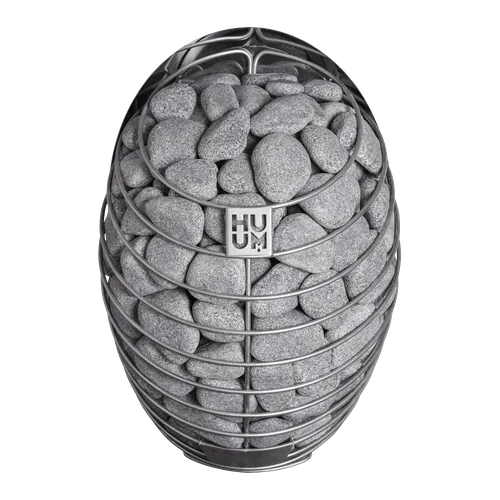
An electric heater holds the temperature you set. Harvia’s KIP manual allows 30 to 60 minutes for a correctly sized heater to bring the room up to temperature, and a Wi-Fi control lets you start it from the HUUM or MyHarvia app before you get home. Size matters here: an undersized heater takes longer and works harder, so start with our heater size guide.
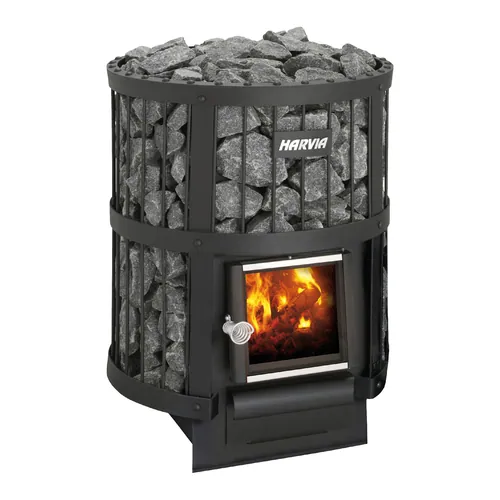
A wood stove puts you in charge of the fire. How fast it heats depends on the stove, the wood and the draft. It needs no electricity to heat, which helps when running a 240 V circuit to the back of a lot would be costly. Our advice for either type: expect a longer warm-up on a January evening than in July.
What it costs to run
Electric. The most a heater can use is its kW times the hours it runs. A 9 kW heater at full power for 1.5 hours uses 13.5 kWh. At Ontario’s Regulated Price Plan time-of-use prices for summer 2026 (9.8¢ per kWh off-peak, 20.3¢ on-peak), that’s about $1.32 to $2.74 of electricity, before delivery charges and other items on your bill. Once the room is hot, the thermostat cycles the heater, so real use is usually lower.
Wood. The cost depends on where you buy firewood. Plan for a steady supply of dry, seasoned wood and a covered place to store it.
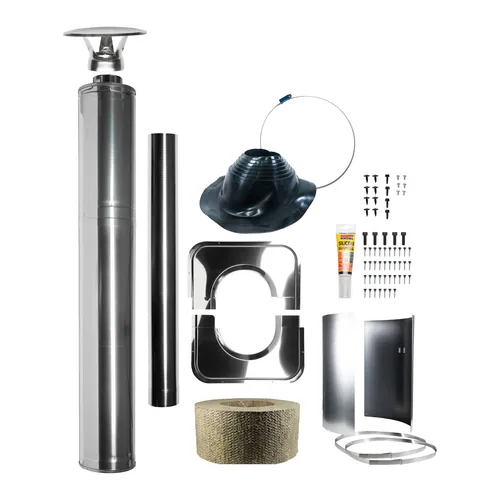
Up-front parts. On our site, a control for an electric heater that needs one costs about $625 to $2,000, and a complete chimney kit for a wood stove costs about $1,100 to $1,650 (prices as of September 2026, CAD before tax). Electric also needs the wiring. Wood may need heat shields or a protective floor base.
Installation
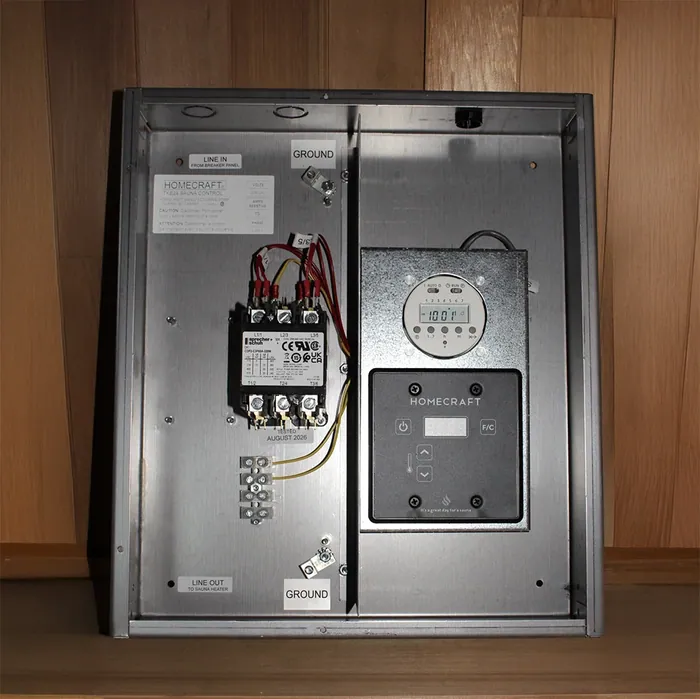
Electric heaters are hard-wired. In Ontario the work is done by a Licensed Electrical Contractor, or by you in your own home with an ESA notification, and Harvia, HUUM and Homecraft all call for a qualified electrician. Our electrical checklist lists what to hand over.
Wood stoves need:
- The right chimney. Use the chimney system the stove maker specifies, sized to the stove’s flue outlet. Many European sauna stoves have a 115 mm (about 4.5 in) flue, so a 6 in chimney needs the adapter the maker lists.
- Safe clearances. Keep the distances to walls, ceiling and benches that the manual lists, and add any heat shields or floor protection it calls for.
- A code-compliant install. Canada’s installation code for solid-fuel-burning appliances is CSA B365. Ask your installer or inspector how it applies to your stove.
- A permit check. The City of Toronto lists installing a wood-burning stove or fireplace among projects that need a building permit. Ask your municipality how that applies to a sauna stove.
WETT inspections and insurance
WETT Inc. is a non-profit that trains and certifies wood-burning professionals in Canada, and it says a WETT-certified inspection helps identify hazards and meet insurance or regulatory requirements. Many home insurers ask for one. Call your insurer before you buy a wood stove, tell them about the sauna, and ask what they need.
Burn and smoke rules
Burn rules are set locally. Toronto, for example, doesn’t allow open-air burning, including bonfires, fire pits and outdoor fireplaces such as chimineas, without written authorization from Toronto Fire Services, under Article 2.4.4.4 of the Ontario Fire Code. A sauna stove is a closed firebox venting through a chimney, which isn’t the same as a fire pit. Still, rules vary from one municipality to the next, so ask yours before you choose wood. Toronto directs smoke complaints to the Ontario Ministry of the Environment, Conservation and Parks. Our advice: think about where the smoke will drift, especially with close neighbours.
Upkeep
- Both: stones break down with heat. Harvia’s KIP manual says to inspect them at least once a year and replace them every two years, or sooner with heavy use. See how many sauna stones you need.
- Wood only: empty the ash, keep the firewood dry, and inspect and clean the chimney as the stove’s manual directs.
Which should you choose?
Choose electric if you want push-button or app start, you can run 240 V to the sauna, you have close neighbours or strict local rules, or you’d rather not store firewood.
Choose wood if running power to the sauna isn’t practical, you enjoy tending a fire, your municipality and insurer are on board, and you’re happy to look after a chimney.
Next steps
- Compare electric heaters and wood-burning stoves.
- Find chimney kits, adapters and heat protection in heater accessories.
- Planning the whole sauna? Read our site prep guide, or contact us about your yard. You pay nothing until you approve a written invoice.
Shop the guide
Products and tools that go with this guide. Prices in CAD, before tax.
Common questions
Is a wood-burning or electric heater better for an outdoor sauna?
Neither is better for everyone. Electric suits owners who want push-button or app start and can run a 240 V circuit to the sauna. Wood suits sites where power is impractical and owners who enjoy tending a fire, as long as their municipality and insurer allow it.
How much does it cost to run an electric sauna heater in Ontario?
At most, the heater's kW times the hours it runs. A 9 kW heater at full power for 1.5 hours uses 13.5 kWh, about $1.32 to $2.74 at Ontario's summer 2026 time-of-use prices, before delivery and other bill charges. Real use is usually lower because the thermostat cycles the heater.
Do I need a WETT inspection for a wood-burning sauna stove?
Many home insurers ask for a WETT inspection of wood-burning appliances. Call your insurer before you buy, tell them about the sauna, and ask what they need.
Can I have a wood-burning sauna in Toronto?
Toronto doesn't allow open-air burning such as fire pits and chimineas without written authorization from Toronto Fire Services. A sauna stove is a closed appliance with a chimney, but the city lists installing a wood-burning stove among projects that need a building permit, so check with Toronto Building first.
Sources
Manufacturer documents and official pages we used. Check the manual for your exact model before you install.
- Harvia, KIP instructions for installation and use (heat-up time, stone care) pim.harvia.com
- Ontario Energy Board, electricity rates (effective November 1, 2025) oeb.ca
- ESA, “DIY electrical work” esasafe.com
- City of Toronto, outdoor fires and open-air burning toronto.ca
- City of Toronto, “When do I need a building permit?” toronto.ca
- WETT Inc. wettinc.ca
- CSA Group, B365 installation code for solid-fuel-burning appliances and equipment csagroup.org
- HUUM, UKU Wi-Fi/Local user manual (HUUM app) huumsauna.com
- Harvia, Xenio Wi-Fi remote control (MyHarvia app) harvia.com
-
Controls & electrical
Sauna heater electrical checklist for Ontario: what to hand your electrician
Wiring a sauna heater in Ontario? Who can do the work, the ESA notification, breaker and wire from the manual, panel capacity and where the contactor goes.
-
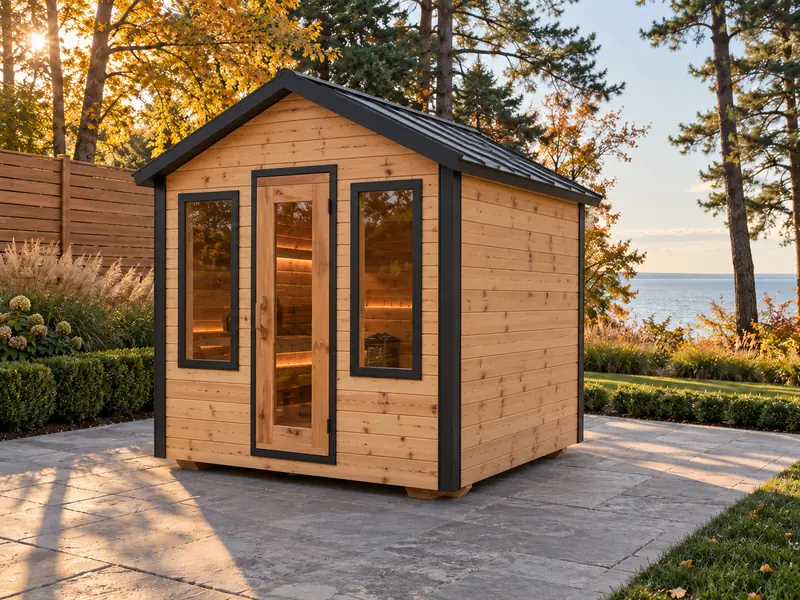
Outdoor saunas
Outdoor sauna site prep: base, delivery access and permits
Planning a backyard sauna? Check permits and zoning, choose the spot, build a level base, and plan delivery access and power, with Ontario and Toronto rules as worked examples.
-
Heaters
What size sauna heater do I need?
Find the right sauna heater size in kW: measure the room, add volume for glass and stone using each maker's rule, then check the amps at 240 V.
Find a heater rated for your room
Enter your room size and glass area, and see only heaters whose manufacturer range fits. You pay nothing until you approve a written invoice.